
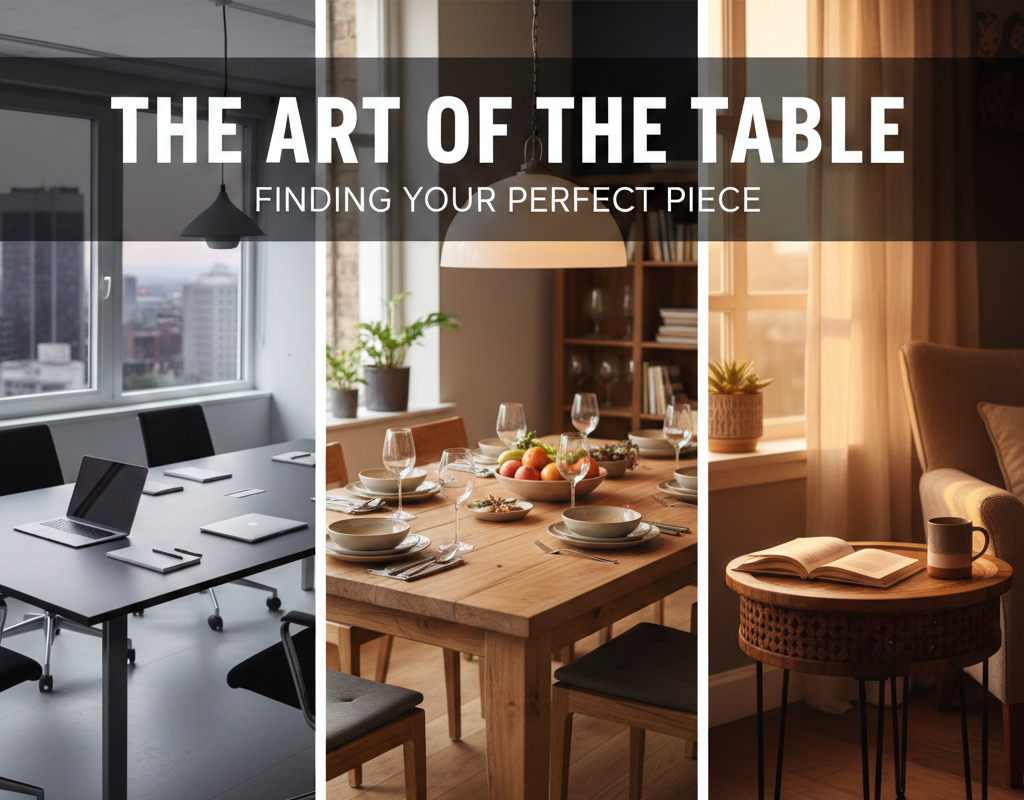
Tables – they’re more than just flat surfaces with legs. They’re gathering points, workstations, artistic statements, and silent witnesses to countless memories. From the sturdy kitchen table where families connect, to the sleek conference table where big ideas are born, and the elegant side table holding a beloved book, tables are fundamental to our lives and spaces. But how do you effectively sell something so ubiquitous yet so varied?
Selling tables isn’t just about moving furniture; it’s about understanding needs, appreciating craftsmanship, and envisioning the perfect fit for a customer’s lifestyle or business. Here’s a look at the art of selling tables successfully.
1. Know Your Niche (and Your Inventory)
Are you selling rustic farmhouse tables, modern minimalist designs, antique classics, or highly functional office tables? Each niche has its own audience and selling points.
- Residential Tables: Think dining tables, coffee tables, end tables, console tables, and accent tables. Focus on style, material (wood, glass, metal, stone), size, and how it complements home decor.
- Commercial Tables: This includes conference tables, breakroom tables, reception tables, restaurant tables, and outdoor patio tables. Here, durability, functionality, adaptability, and brand image are key.
- Specialty Tables: Drafting tables, game tables, workbenches – these require an understanding of specific uses and features.
Deep knowledge of your inventory, including materials, dimensions, construction, and design history, allows you to speak with authority and guide customers effectively.
2. Highlight Functionality & Lifestyle
A table isn’t just an object; it’s a solution.
- Problem-Solving: Does the customer need a small table for a compact apartment, or an expandable dining table for entertaining? Do they need a durable surface for a busy restaurant, or a stylish piece to complete a living room?
- Lifestyle Integration: Help customers visualize how the table will fit into their lives. For a dining table, talk about family dinners, holiday feasts, or homework sessions. For an office table, discuss productivity, collaboration, and professional image. Use descriptive language that paints a picture.
3. Emphasize Quality and Craftsmanship
Customers want value for their money. Point out the details that speak to a table’s quality:
- Materials: Is it solid wood, veneer, tempered glass, high-grade steel? Explain the benefits of each.
- Construction: Look for sturdy joinery, smooth finishes, stable bases, and thoughtful design elements.
- Durability: How long will it last? Is it scratch-resistant, water-resistant, or easy to maintain? This is especially crucial for commercial settings.
4. Aesthetics and Design Story
Tables are often central to a room’s aesthetic.
- Style Matching: Help customers match tables to their existing decor – whether it’s contemporary, traditional, industrial, or bohemian. Offer advice on how a table can anchor a room or serve as a focal point.
- Design Inspiration: Share the story behind a design. Is it inspired by a specific era, an architectural style, or a renowned designer? This adds character and allure.
- Color & Finish: Discuss how different finishes can impact the overall look and feel of a space.
5. Offer Customization and Personalization
In today’s market, personalization is a huge draw. If possible, offer options for:
- Size variations
- Different finishes or colors
- Choice of legs or bases
- Material upgrades
This allows customers to create a table that is truly unique and perfectly suited to their needs.
6. Provide Excellent Customer Service
From the moment a customer walks in (or clicks online) to post-purchase support, service is paramount.
- Listen Actively: Understand their budget, space constraints, style preferences, and primary use for the table.
- Educate, Don’t Just Sell: Share information about care, assembly, and delivery.
- Follow Up: A simple follow-up email or call after delivery can build lasting relationships.
7. Showcase with Visuals
A picture is worth a thousand words, especially when selling furniture. High-quality images and even 3D renderings or augmented reality tools can help customers visualize the table in their own space. Show tables in context – set up for a meal, in a bustling office, or adorned with decorative items.
Selling tables is about connecting people with the perfect piece of furniture that enhances their lives, work, and spaces. By focusing on quality, functionality, aesthetics, and exceptional service, you can turn a simple transaction into a satisfying experience for both seller and buyer.